Goal 13 - Climate Action
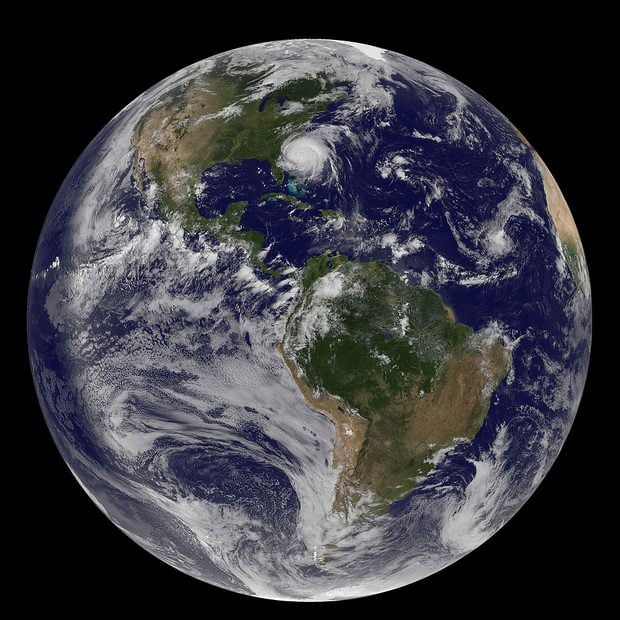
The Flipgrid video asked members to comment on their hopes and dreams for the future and in specific their vision for 2030. My hopes and dreams for a better future is a world in which collaboration and respect are our first priorities. We are facing a lot of challenges in the world and I don't believe that one single country, state, or business can solve them. I think back to Dr. Edelstein's presentation on Monday. One of his first slides in which he showed us a picture of earth from space and he asked us "What do you see?"
I was impressed with many of the video responses on the Flipgrid, I really appreciate the first person that added children into the conversation. While they may not necessarily have all the expertise they have ideas and creativity. I also think that education will play a huge role in reaching some of these global goals in order to help in the cohesiveness of the actions we take as well as starting to build respect around the globe. I think this will be much easier to do if were can all be on the same page with the facts presented to us through education.
Education is primarily were I see my role in inspiring Climate Action Heroes for Change. During our first class Francesca, the Fulbright Scholar talk about how there are different tiers of climate action. As an educator I would want to follow these tiers in my classroom as I introduce climate change and as we as a class being to pick projects we can do as individuals, a community, and as a society.
To introduce climate change I would use many of the tools, posters, and videos posted on World's Largest Lesson. I think after a brief introduction to the over arching themes of climate change it would be great to use the blank icons in the activity packet to have students discuss and label the different global goals.

We all answered with obvious observations such as the ocean or land, however, what Dr. Edelstein was getting at is that on this planet called earth, everything is connected "there's no such thing as an individual event on earth". Moving forward to 2030, that is why I think it is vital that we are all in communication with one another and if done respectfully we might be able to accomplish some of the climate action goals.
I was impressed with many of the video responses on the Flipgrid, I really appreciate the first person that added children into the conversation. While they may not necessarily have all the expertise they have ideas and creativity. I also think that education will play a huge role in reaching some of these global goals in order to help in the cohesiveness of the actions we take as well as starting to build respect around the globe. I think this will be much easier to do if were can all be on the same page with the facts presented to us through education.
Education is primarily were I see my role in inspiring Climate Action Heroes for Change. During our first class Francesca, the Fulbright Scholar talk about how there are different tiers of climate action. As an educator I would want to follow these tiers in my classroom as I introduce climate change and as we as a class being to pick projects we can do as individuals, a community, and as a society.
To introduce climate change I would use many of the tools, posters, and videos posted on World's Largest Lesson. I think after a brief introduction to the over arching themes of climate change it would be great to use the blank icons in the activity packet to have students discuss and label the different global goals.

I would also like to use the introductory video by Malala Yousafzai that introduces the World's Largest Lesson.
After introducing my students to fundamental knowledge about
climate change I would begin to give examples of how we can each individually
help reduce effects of climate change, echoing the first tier of action. I
would want to make sure I include things I personally do to make an effort to
action change and get them to brainstorm and practice things they can do in
their own personal lives.
After practicing individual actions of change and
discussing/researching more specific information about climate change I would
create a classroom project in which they have to tackle a way to bring their
new knowledge to the greater school community and maybe start a school wide
initiative. This would move into the next tier of action change.
Lastly we would move into the third tier, political/society,
while children may not think they can do much on this front I would urge them
otherwise. At this point our breadth of knowledge would be widely structured
and my students would understand the ins and outs of climate change. I could
bring in a local politician for a Q&A, we could write letters to a local
representative, and/or we could create a presentation for parents so that their
knowledge makes it home to the voters of legal age.
Through this scaffolding of moving from direct instruction
and talking about climate change on an individual level and moving up to
talking about the big picture, political aspect of climate change, I would hope
my students would grasp the severity of the topic as well as the urgency and
continue school initiatives into other grades. The Global Goals website has a
lot of great resources and could definitely come in handy as well as having the
National Day to Celebrate Climate Change Action Heroes and use that day as a
day to share our knowledge with the community and society through platforms such
as Flipgrid.

Hi Nicole! I enjoyed reading your blog, it seems like you got a lot out of the presentation and you had many ideas brewing for your classroom on the topic climate change. I think tying in Malala is a great idea, maybe you could tie in an ELA lesson with science using Malala. I have not heard of World's Largest Lesson before, but I went and checked out the website and it has so much to offer! What age do you think would work best for this lesson? I believe there are many ways to make this work from Kindergarten up to 12th grade! Great ideas!
ReplyDelete